How long for paint to cure is a different question than how long it takes to dry. Mixing up the two is where most homeowners run into trouble. After years of interior house painting across Southwest Florida, I have seen fresh coats stay tacky far longer than the can label promised. The reason is simple. The air in the room held onto more moisture than the paint could push out. If you are asking how long does interior paint take to dry in your own house, the short answer is longer than it would take in a drier state. The reason comes down to what is already in the air around you.
Why Humidity Changes the Rules on Drying Time
Paint does not dry the way a puddle dries. Water based paint cures as water leaves the film and the paint bonds into a hard surface. When the air in the room already holds moisture, that water has nowhere to go. The evaporation slows down because the air has less room to absorb what the paint needs to release.
Fort Myers sits in a humid climate. National Weather Service climate data for the Fort Myers area shows relative humidity that regularly runs well above 50 percent most of the year, especially in summer. That is well above the humidity level most paint makers use to test drying times on the can. The gap between the lab number and your living room is the reason a repaint here rarely dries on the schedule printed on the label.
Humidity is not the only factor. Room temperature, airflow, and how thick the coat was applied all play a part too. But in Fort Myers, humidity is usually the biggest factor, and it is the one most homeowners never think to check.
How Long Does Interior Paint Take to Dry in Fort Myers Homes
Sherwin-Williams is the coating line I use on most interior jobs. Their data lists a standard interior latex as dry to the touch in about one hour and safe for a second coat in about four hours. Those numbers come from a lab test done at 77 degrees and 50 percent relative humidity, conditions Southwest Florida indoor air rarely matches during the warmer months, even with the AC running. So those numbers stretch out. Here is what I generally tell clients to expect once the room’s humidity runs higher than the lab conditions the can was tested at.
| Stage | Standard Lab Conditions (50% RH) | Typical Fort Myers Indoor Air (65 to 80% RH) |
|---|---|---|
| Dry to the touch | About 1 hour | 2 to 4 hours |
| Safe to apply a second coat | About 4 hours | 8 to 12 hours |
| Safe to move furniture back | About 24 hours | 48 to 72 hours |
| Fully cured and washable | 21 to 30 days | 30 days or longer |
These ranges assume a properly prepped wall and a coat applied at normal thickness. A heavier coat, a closed-up room, or a bathroom with no exhaust fan running will all push you toward the slower end of that range.
Drying Time Also Depends on the Room
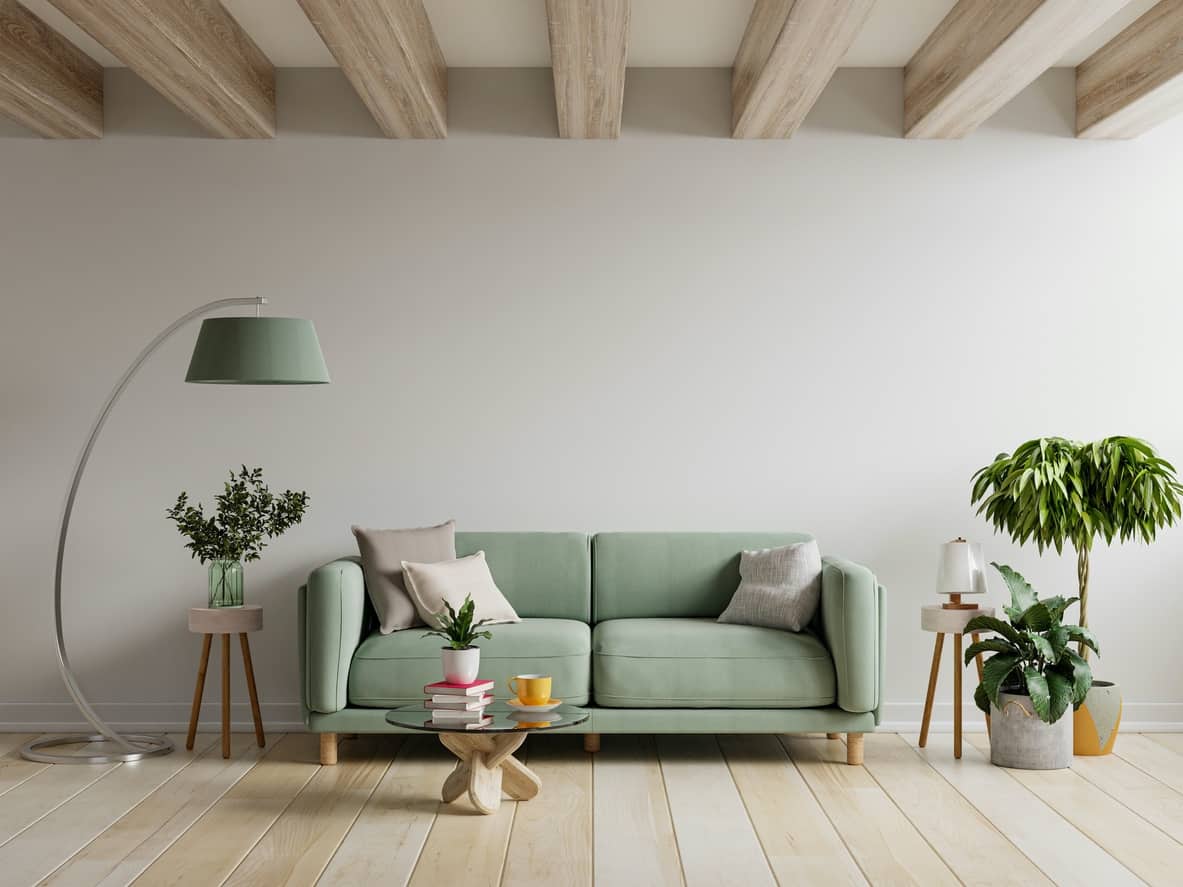
Not every room in your house dries at the same pace. Some rooms hold more moisture in the air than others, and that changes how long you should wait.
Timing Your Project Around Our Wet Season
Southwest Florida has a wet season that runs roughly June through September, with afternoon storms that push outdoor humidity even higher. Indoor humidity follows the same pattern, since open doors, deliveries, and daily foot traffic bring that outside moisture in.
Scheduling an interior repaint during the drier months, roughly November through April, is not required, but it does give the paint an easier path to a full cure. If your project has to happen in the middle of summer, running the AC steadily in the days before and after painting makes the biggest difference. I plan around this with every client, so the timeline you get from me already accounts for the season, not just the paint can.
Signs the Room Needs More Time, Not More Patience
Watch for these signs before you treat a freshly painted room like it is finished:
If you notice two or more of these, the paint has not caught up with the humidity yet. Pushing forward usually costs more than waiting it out.
What I Do During the Job to Protect Your Timeline
My interior house painting process is built around the surfaces I am coating, not a generic checklist. Every room gets protected floors and furniture, patched and sanded walls, and primer wherever adhesion or stain blocking is a concern, all before a drop of finish paint goes on.
Getting the prep right the first time is what keeps the drying clock from working against you later. A wall that was never properly sanded or primed holds onto moisture differently than one that was.
Helping the Paint Along Once I Am Gone
A few habits in the days after I leave make a real difference in how fast your walls actually cure.
None of these steps cost extra, and together they can trim real time off how long your room stays off limits.