Peeling, chalking, and bubbling paint can show up on a Fort Myers home long before it should. If you have ever wondered what causes paint to peel, the short answer is simple. Something got between the paint and the wall, usually water, heat, or skipped prep. My crews handle exterior house painting across Southwest Florida. I walk homes with exterior paint problems almost every week. Most of the failures I see trace back to a cause you can name, not bad luck.
The hard part is not knowing whether a flaking patch is cosmetic or a sign of something bigger. A homeowner should not have to guess. Below, I break down the three failures I see most. You will learn what each one says about your house and what a lasting repair involves.
Why Fort Myers Weather Is Hard on Exterior Paint
National Weather Service climate normals for Fort Myers show about 57.41 inches of rain in an average year. Nearly 30 of those inches fall in June, July, and August alone. Average highs in those months sit above 91 degrees. That mix of heavy rain, high heat, and strong sun puts steady stress on every painted surface outside your home.
| Season | Average Rainfall (inches) | Average High (°F) |
|---|---|---|
| Winter (Dec, Jan, Feb) | 6.11 | 76.8 |
| Spring (Mar, Apr, May) | 7.97 | 85.3 |
| Summer (Jun, Jul, Aug) | 29.47 | 91.4 |
| Autumn (Sep, Oct, Nov) | 13.86 | 86.0 |
Weather does not create weak spots, but it finds them fast. An open caulk joint, a stucco crack, or a thin coat gives water and heat a way in. That is where most exterior paint problems start.
The 3 Exterior Paint Problems I See Most in Fort Myers
Each failure looks different, and each one points to a different cause. Here is a quick side by side view.
| Problem | What You See | Most Common Causes |
|---|---|---|
| Peeling | Paint lifting in strips or flakes, often near gutters, sills, and trim | Water behind the paint, a dirty or chalky surface, no primer |
| Chalking | White or tinted powder that rubs off on your hand | Sun exposure, low grade or thinned paint, an unsealed porous surface |
| Blistering | Bubbles in the paint film | Painting in direct sun, moisture in the wall, rain or dew before the paint cured |
What Causes Paint to Peel on a Florida Home
Peeling happens when paint loses its grip on the surface. Once an edge lifts, water gets under it and the peel spreads. On homes around here, I usually find one of these causes:
Scraping and recoating one spot rarely holds if the water source stays open. The real fix starts with finding where the moisture comes from, then sealing it before any paint goes on.
Chalking: The Powder That Rubs Off on Your Hand
Chalking is the fine powder that forms as paint breaks down in the sun. According to Sherwin-Williams, some chalking is a normal way for paint to wear. Heavy chalking is a different story. Their listed causes include low grade paint, over thinning, thin coats, and an unsealed porous surface.
Here is a simple check. Rub a dark cloth across a wall that gets full sun. If the cloth comes away coated, new paint will not bond well until the wall is washed and sealed. Painting over heavy chalk is a lot like painting over dust.
Blistering: Bubbles That Point to Heat or Water
Blisters are bubbles that form when paint lifts away from the surface below. Sherwin-Williams names three main causes. The first is painting in direct sun on a surface that is too hot. The others are moisture moving through the wall and dew, humidity, or rain reaching latex paint soon after it dries.
In Fort Myers, all three are common. Summer storms build fast in the afternoon. That is why I would rather move a project a day than rush paint onto a hot, damp wall. When we open a blister and find bare stucco or wood under it, moisture is the likely cause. That moisture has to be fixed first.
A 10 Minute Walk Around Your Home
You do not need a ladder to spot early warning signs. A slow walk around the outside of your home tells you a lot. Look for:
Two or more of these at once usually means the problem is bigger than a touch up. Spotting them is step one. Finding the cause is step two, and that is the first thing we do on every exterior house painting estimate.
Older Homes Need One Extra Check
Some Fort Myers neighborhoods include homes built before 1978. The EPA notes that peeling, chipping, chalking, or cracking lead based paint is a hazard. Its home lead danger zone finder shows where that paint often turns up. If your home is that age, ask any painter how they will test the old paint before scraping.
Our Plan to Fix Exterior Paint Problems So They Stay Fixed
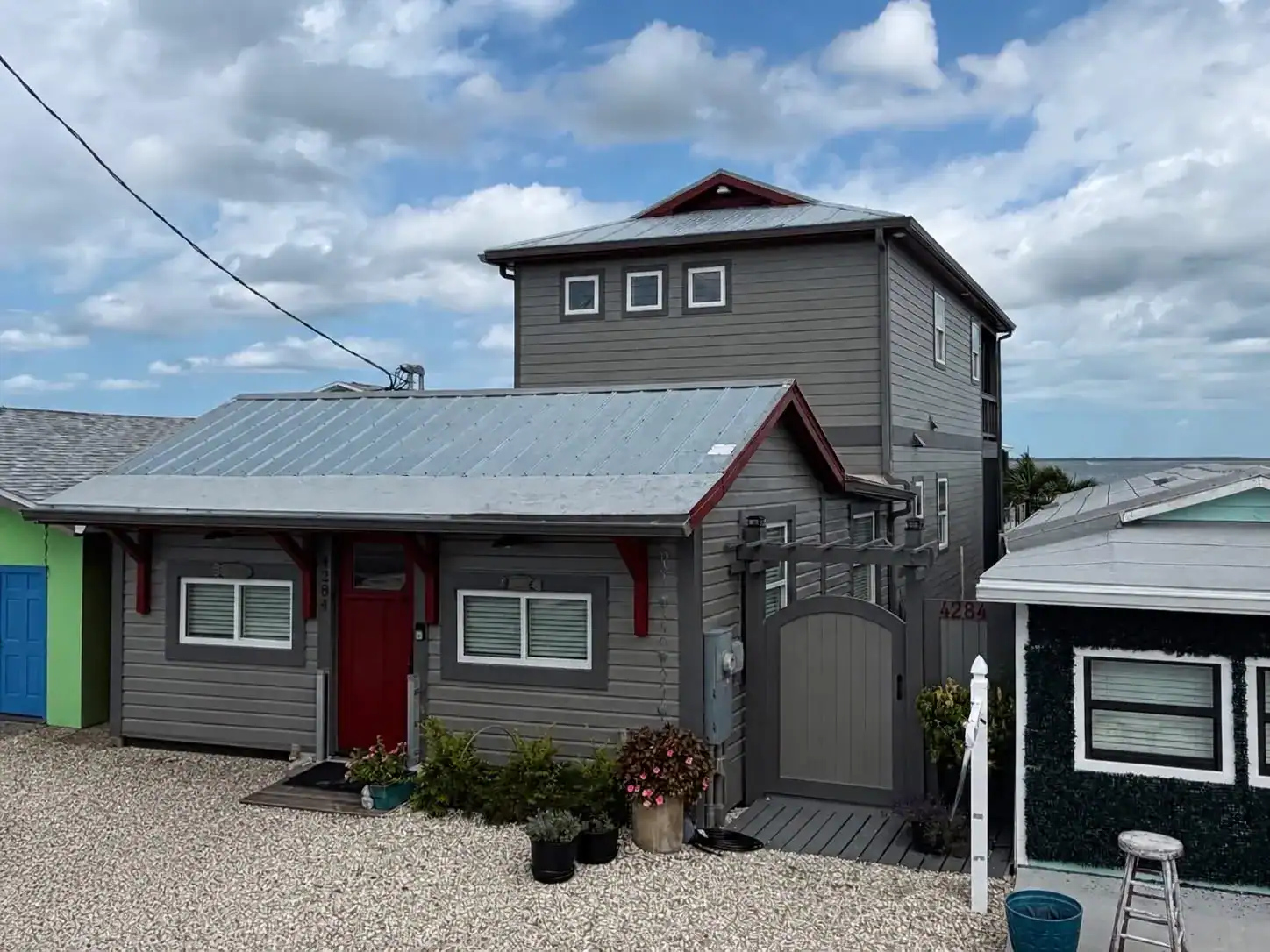
A repair only lasts when the cause gets fixed before the paint goes on. Every exterior job we take follows the same nine steps in order. These are the ones that matter most for peeling, chalking, and blistering:
- 1We walk the exterior with you and flag chalking, cracks, peeling, failing caulk, and damaged stucco before work starts.
- 2We pressure wash or soft wash to remove dirt, mildew, chalk, and loose paint.
- 3We scrape and sand failing paint, patch stucco cracks with elastomeric patching, and replace failing caulk.
- 4We seal chalky or porous areas with a chalk sealing primer and spot prime bare patches.
- 5We spray and back roll stucco so the coating works into the texture, using Sherwin-Williams coatings matched to each surface.
- 6We walk the finished job with you before it is considered complete.
There is no deposit, and you pay only after that final walkthrough. Our work carries a 1 year workmanship warranty. Sherwin-Williams exterior coatings also carry a manufacturer warranty against peeling and bubbling. It runs from 2 years on SuperPaint up to 5 years on Emerald. We also watch the forecast and reschedule rather than paint into rain.
What Waiting Can Cost You
Paint is the first layer of protection for stucco and wood. When it fails, water starts working on what is underneath. Stucco cracks grow. Wood trim and fascia can soften and rot. A simple wash, patch, and paint job can turn into one with carpentry or stucco repair added on top. I would rather tell you early that your paint has years left. Telling you late that the trim needs replacing helps no one.